

LG wins Renault van cockpit deal for E-Tech Electric
Mon, 19th Oct 2026 (Today)
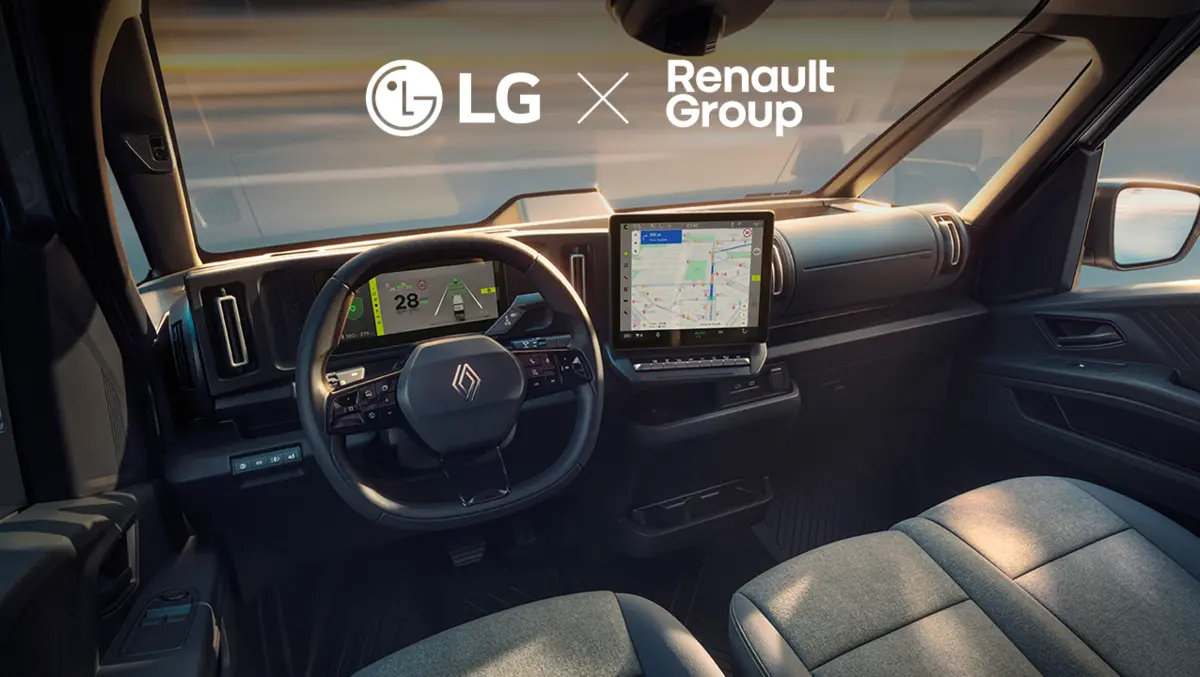
LG Electronics will supply its integrated cockpit solution for Renault Group's New Trafic E-Tech Electric, Renault's first mass-produced commercial vehicle built on a software-defined vehicle architecture.
The system combines instrument cluster and infotainment functions within a single control framework for software-defined vehicles. LG said the setup is intended to present driving and media information more consistently across the vehicle's displays while simplifying cockpit architecture.
Renault's New Trafic E-Tech Electric has also won the International Van of the Year award, giving the model added visibility as the carmaker introduces a software-led design approach across its commercial vehicle line-up.
Unified cockpit
In conventional vehicles, control functions are typically spread across multiple electronic control units assigned to systems such as the cockpit, advanced driver-assistance systems and the powertrain. Software-defined vehicles instead use a centralised software architecture and high-performance computing to manage a broader range of functions from fewer control points.
LG's cockpit product is designed for that model. It combines the cluster, which displays information such as speed, revolutions per minute and warning alerts, with the infotainment system, which manages features including navigation and media playback.
This integration puts the cockpit on a single control platform for the vehicle domain rather than splitting those functions across separate systems. The approach can also support over-the-air updates, a core feature of software-defined vehicle design that allows manufacturers to add or update functions after delivery.
For carmakers, the shift to integrated cockpit systems is also tied to cost and engineering pressures. Combining hardware and software layers can reduce component counts and help streamline system design, particularly as manufacturers seek to standardise architectures across multiple models.
Long relationship
The agreement builds on a long-running relationship between the two groups. LG said it had worked with Renault Group for several years and had been recognised by the French carmaker as an outstanding supplier in 2014, 2017 and 2020.
The companies also worked together in 2021 on an Android-based automotive infotainment system. That project was part of a broader shift in the car industry towards software platforms that support regular updates and closer links between vehicle hardware and digital services.
LG's automotive operation has expanded from infotainment into broader in-vehicle electronics, drawing on software and interface design experience developed across its consumer electronics businesses. Its work in instrument clusters and infotainment systems has made it a supplier to manufacturers seeking cockpit systems suited to software-led vehicle platforms.
The broader market backdrop is a rapid shift towards software-defined vehicles as carmakers rethink how vehicle functions are controlled, updated and monetised. Commercial vehicles have generally moved more slowly than passenger cars in this area, making Renault's adoption of an SDV architecture for a mass-produced van notable within the sector.
For fleet buyers and operators, software-led designs can affect maintenance, feature updates and the life cycle of in-cabin systems. Integrated cockpit platforms may also shape how drivers interact with navigation, vehicle status and media controls in vehicles used for delivery, logistics and service work.
Although LG framed the deal around the Renault van, it also signalled a broader push to win more business in automotive electronics tied to software-defined platforms in North America, Asia and other markets. Competition in that segment has intensified as established parts suppliers and technology groups seek a larger role in the software layer of future vehicles.
"Building on our close collaboration with Renault Group and other global automakers, we will continue to advance the core technologies and solutions needed to support the mobility industry's transition to SDVs," said Eun Seok-hyun, president of the LG Vehicle Solution Company.