

Exclusive: Adobe's Firefly is to reshape creative pipelines
Wed, 29th Oct 2025
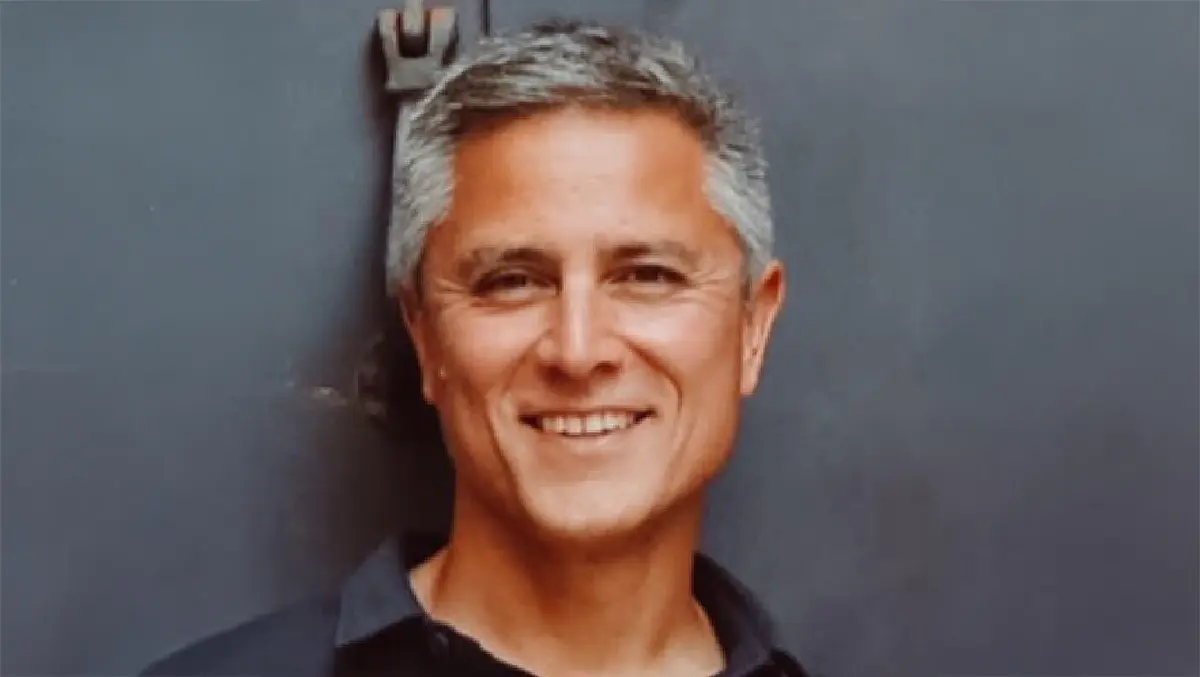
Adobe is making a bold play to become the main platform that global brands and creative agencies use to produce and scale visual content, according to Joe Karp, Director of Strategy and Product Marketing for Firefly Enterprise.
Speaking in an interview at Adobe Max, Karp described how the company is shifting from simply providing creative software to powering automation workflows across entire organisations. The move comes as agencies and brands face ever-growing demands for personalised content across markets, devices and formats.
"We really want to help an enterprise do all of their content creation and production in one place," Karp said. "All the stuff that you saw this morning, we're bringing a lot of that into the AI studio environment with Firefly."
A new layer on top of the creative tools
Firefly, Adobe's family of generative AI models, has been positioned as both an ideation tool and a way to automate laborious production tasks. But Karp stressed that the company is now focused on helping major brands build repeatable, large-scale workflows that reflect their existing processes.
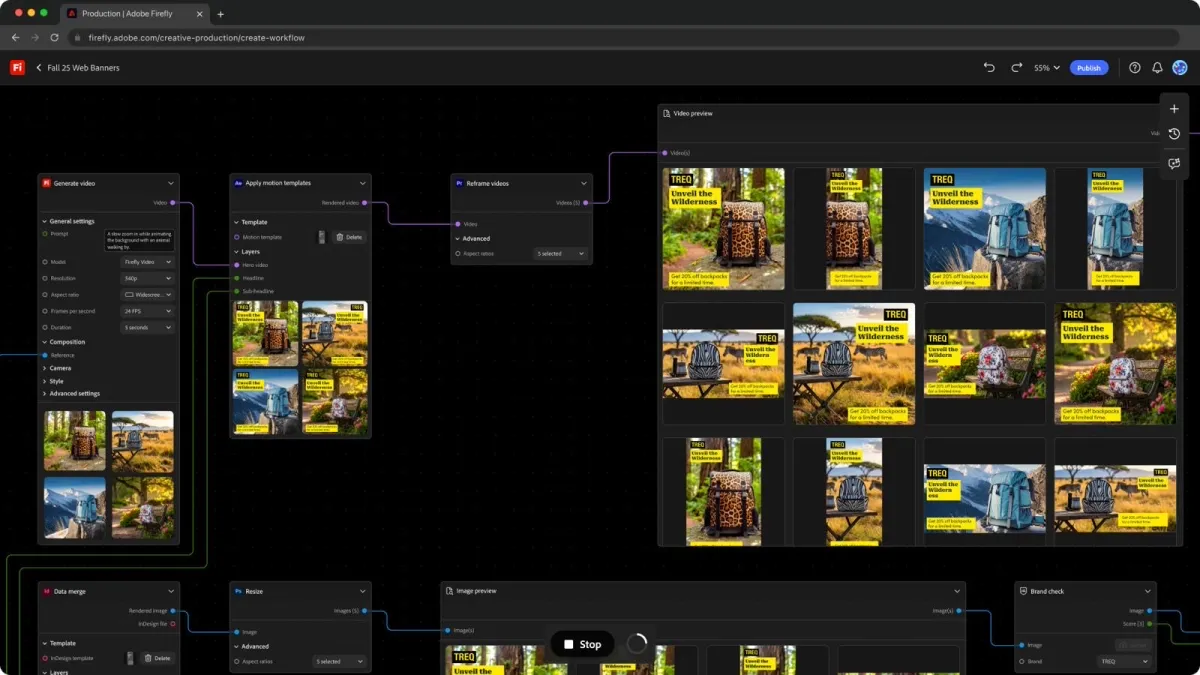
Adobe now offers a mix of creative APIs and workflow tools that allow companies to take a "hero" image or video and rapidly version it for different channels and audiences, something that used to require hours of manual Photoshop adjustment.
"You can actually take that one hero image or set of hero images, and then version it off for different channels," he said. "Each channel might have a different aspect ratio. With Firefly services you can scale that as a custom workflow."
Custom models for brands, not just artists
Last year Adobe introduced custom Firefly models, which allow creators to train the AI on a set of their own images to generate brand-consistent content. Now Adobe is pushing this further with Firefly Foundry, which lets large organisations perform deeper training on proprietary characters, styles or worlds.
Karp offered the example of a major entertainment studio creating models for different shows or franchises. "You can think of different media and entertainment customers who have specific characters that they want to generate around," he explained. "You're going deeper into the model… and that's your model that you can do generations and creations off of."
This shift hints at where the company sees the biggest commercial value: helping major brands create huge libraries of customised content while maintaining legal and commercial safety.
"In the enterprise world, commercial safety is of paramount importance," he said. "When it comes time to actually create production-ready assets, they want to use Firefly-type models."
Automation without the Photoshop window
One of the clearest changes is the trend toward "headless" creative work, where tasks that once required manually interacting with Photoshop or Premiere now run behind the scenes as part of automated workflows.
If a brand needs to remove the background from thousands of product photos, colour-grade them, replace a backdrop, add localised text and format the output for multiple regions, Firefly can now handle that in a single automated flow.
"That's why we've taken the APIs and plugged them into a UI that creatives can use to create and manipulate workflows," Karp said. "Firefly Creative Production is no-code."
Adobe has even started offering "preset workflows" for teams who simply need bulk editing – such as cropping, background removal and colour grading – without requiring IT support.
Agencies are morphing into tech providers
The rise of AI-driven workflows is reshaping agencies as much as brands. Karp noted that many agencies are now building their own internal platforms for clients, mixing services from Adobe, Google and OpenAI.
"They are trying to reinvent themselves and be technology players as well," he said. "And Adobe believes that we should be the ones there to help and support them as they build that vision out."
This marks a shift from agencies being purely creative partners to becoming workflow and systems integrators. Some, Karp said, are even starting to resemble SaaS companies.
Personalisation and localisation at scale
The industry's biggest demand is localisation and personalisation - especially for eCommerce. Brands want product images to look like they were shot in the local environment, not just translated with different text.
"A street scene here in LA is going to look a lot different than a street scene in Prague," Karp said. "That's what we think of when we think of localisation."
By automating this at scale, brands can pre-generate personalised variants of the same product for different demographics, seasons, regions and individuals.
Not replacing creativity
Karp emphasised that Adobe is not trying to eliminate creative tools, but rather to remove the "grunt work" that slows down teams.
"This is one of the few times I've seen a veritable enterprise solution," he said. "We're allowing AI to take all that grunt work off their shoulders."
He paused before concluding, with clear conviction: "The agency landscape is changing, the marketing department is changing, the creative process itself is changing, and we want to be the platform that holds it all together."