

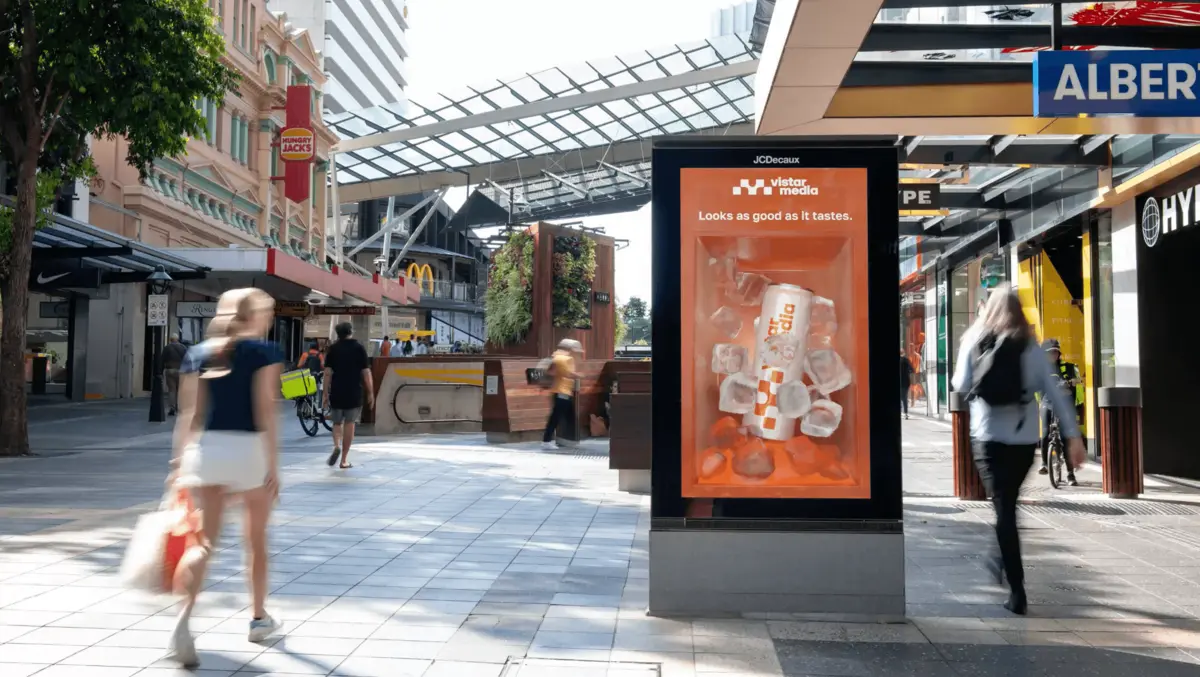
Vistar study finds 3D boosts digital out-of-home awareness
Thu, 21st May 2026
Vistar Media has published research on the impact of motion and 3D creative in digital out-of-home advertising. The study found that 3D creative was 67% more effective than non-motion formats at driving brand awareness.
Produced with Omnicom Media and JCDecaux, the report was based on responses from 7,513 people and compared 3D, full-motion, limited-motion and static advertisements in digital out-of-home campaigns.
Motion improved performance across the main brand metrics measured in the study. Compared with static creative, adding motion delivered an average 33% uplift in ad recall and a 50% increase in brand awareness.
Static advertisements also performed strongly, pointing to the value of the medium itself as well as the creative treatment. Static creative produced a 38% uplift in aided ad recall.
Format differences
Among the formats tested, 3D creative recorded the strongest results for top-of-mind awareness, producing a 10% uplift compared with a control group. Vistar attributed this to a stronger sense of depth and physical presence.
The research also found that more elaborate animation was not always necessary to improve results. Limited-motion executions, such as a spinning logo, could be as effective as more complex video treatments in reinforcing a brand.
Audience response
The findings also showed differences by age. Respondents aged 18 to 34 showed the strongest overall response to motion, while 3D was the most effective format for brand awareness among those aged 50 to 65.
This suggests that creative choices in digital out-of-home campaigns may need to vary by audience as well as by budget, location and regulatory constraints. The study also noted that motion is not always permitted on screens in some markets.
Martine Hammink, Vice President, Creative Studio & Creative Solutions at Vistar Media, said the findings reflected long-held views across the sector about the role of motion in out-of-home advertising.
"This research confirms what many in the industry have long suspected: motion and 3D are powerful tools for designers and advertisers," Hammink said.
She added that creative teams often have to work within practical limits when deciding what to run on digital screens.
"However, we must also be realistic. Sometimes motion is not permitted due to local regulations, and at other times there is a lack of time or budget for complex animations. 'Science in Motion' provides brands and design teams with the data and insights needed to make the best creative choices within those constraints, closely aligned with campaign objectives," Hammink said.
Sector context
The report adds to a broader industry effort to link creative decisions in digital out-of-home more closely to measured outcomes. As digital inventory expands across roadside, transport and retail environments, media owners, agencies and advertisers have been seeking more evidence on how different formats affect recall and awareness.
Vistar operates in more than 35 markets and is part of T-Mobile Advertising Solutions. Its business spans software and media transaction services for the out-of-home sector, including tools used by buyers and media owners to plan, deliver and manage campaigns.
The findings reinforce a simple point for advertisers using digital out-of-home screens: motion appears to improve results, but the screen environment itself remains a strong driver of recognition even without animation. For older audiences in particular, the report found that 3D was the strongest format for brand awareness.