

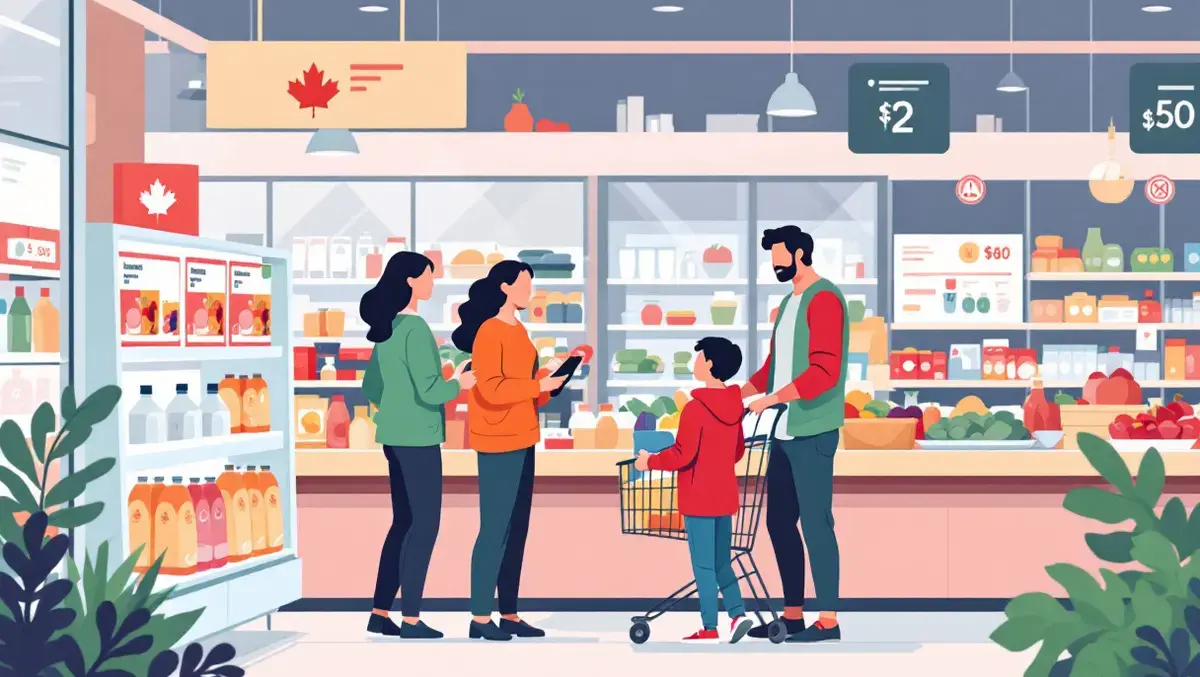
Canadians turn to pay-later services for groceries
Wed, 8th Jul 2026 (Today)%201.webp)
Canadians are spending more on groceries and increasingly using pay-later services to manage those costs, according to KOHO's latest Grocery Gap Report, based on spending data from more than 173,000 members across Canada.
Average grocery spending per user rose about 5% year on year to $275 a month from $261, reflecting both larger basket sizes and more frequent trips to food shops.
Average basket size increased 2.4% to $45.65 per transaction from $44.58, while shopping frequency rose 2.9% to 6.03 trips a month from 5.86. In a separate longitudinal cohort of 17,400 members tracked over time, grocery spending per user increased 3.1%, supporting the broader trend.
Discount shift
The data also showed a shift towards discount grocers as households looked for cheaper options. Trips to discount chains such as No Frills and Giant Tiger increased 4.1%, while trips to premium grocery retailers were broadly flat, rising 0.3%.
Basket sizes at discount retailers rose 1.6%, compared with 0.9% at premium chains. The pattern suggests shoppers are changing both where they buy food and how often they visit stores as budgets tighten.
Another notable shift was the use of deferred-payment products for essential purchases. Adoption of KOHO Pay Later rose 109%, from 0.82% of users to 1.71% over the period studied.
This was the fastest growth among the financial products KOHO examined. By contrast, take-up of its Cover service was relatively stable, while adoption of Credit Building and Earn Interest declined.
Household pressure
The figures add to evidence that food inflation remains a pressure point for Canadian households even as consumers adjust their behaviour. Grocery bills, unlike many discretionary purchases, are difficult to postpone, making them a useful measure of stress in day-to-day household finances.
The report also found that pressure was not confined to supermarket spending. Outlays on food delivery rose 9% year on year to $235 a month from $215 across platforms including DoorDash, Uber Eats and SkipTheDishes.
Spending on eating and drinking out increased 4%, while retail spending rose 6%. Together, the data points to wider strain across household budgets rather than a grocery-only problem.
Younger consumers appeared to be seeing the sharpest increases in grocery costs. Canadians aged 18 to 24 recorded grocery basket growth of 5.4%, more than double the national average of 2.4%.
That age group still had the smallest average basket overall, but the pace of increase was the fastest in the dataset. Canadians aged 35 to 44 continued to post the highest average grocery basket, which KOHO linked to household and family shopping patterns.
KOHO, whose tools are used by more than 2.5 million people across Canada, drew its findings from transaction data from its members between May 2025 and May 2026. It is part of a group of financial technology firms that offer budgeting, savings, and short-term credit products to consumers seeking alternatives to traditional banks.
The growth in pay-later use for groceries is likely to draw attention because these products have often been associated with discretionary purchases like fashion or electronics. The latest figures indicate that instalment-style borrowing is now being used more often for everyday necessities.
"One of the most interesting findings is that affordability pressures are changing behaviour, but not always in predictable ways," said Faye Lucas, Head of Consumer Trust at KOHO.
"The findings make it clear that grocery costs are rising faster than Canadians can adapt. People are changing where they shop, how often they go, and how they pay, yet spending keeps climbing," Lucas added.
KOHO also linked the report to a grocery giveaway for one Canadian household worth $500 a month over 10 years, for a total of $60,000. The initiative sits alongside its broader effort to position itself around day-to-day money management as rising living costs reshape consumer borrowing and spending habits.
"Groceries are one of the most persistent financial pressures Canadians face. The 10-Year Grocery Giveaway is our way of putting meaningful support behind an expense that households cannot simply opt out of," Daniel Eberhard, Founder and CEO of KOHO, said.